

Choosing the right 24 hour in‑home care provider is a major decision for families seeking dependable, compassionate support for aging parents or loved ones with chronic conditions. A professional care agency like Rhythms Home Care provides security, comfort, and consistency through careful planning and by thoughtfully answering all your questions.
Creating a checklist of non-negotiables is one of the most effective ways to evaluate your options. It ensures every key factor, from caregiver credentials to payment details, is considered before signing a care agreement.

What Is The Benefit Of 24 Hour In‑Home Care?
Families often choose 24 hour in‑home care to ensure their loved one receives continuous help without leaving the comfort of their home. With professional caregivers on rotation, clients benefit from around‑the‑clock supervision and assistance with daily living.
But quality among agencies can vary widely, so it’s essential to evaluate a few critical areas before committing to a provider.
What Qualifications Should I Look For In A 24 Hour Caregiver?
The most important part of care begins with the people providing it. Skilled, trustworthy caregivers make all the difference in comfort and safety.
Make Sure Caregivers are Vetted
Ask each agency what kind of background checks they perform. A reputable provider will review criminal history, check references, and verify prior work history.
You should also confirm that caregivers are bonded and insured to protect your family from liability. A bonded caregiver means there is a financial guarantee in place that protects the client from potential theft or damage to their property.
In 24 hour in‑home care, this matters because caregivers have long, unsupervised access to the home, so bonding adds an extra layer of protection beyond trust and references. Bonding usually comes alongside liability insurance and background checks, and is more common when caregivers are hired through an agency than when they are hired privately.
Look for Consistent Ongoing Training for Caregivers
Caregivers should be trained in essential areas such as CPR, first aid, and safe mobility assistance. These foundational skills allow caregivers to respond confidently in emergency situations and support clients with daily movement in a way that prevents falls and injuries. Many agencies also invest in ongoing education for their staff, including dementia care, medication support, and communication skills with older adults.
Our caregivers participate in quarterly, in-person training sessions that keep their skills sharp and up to date with best practices in home care. In addition, we provide annual competency training for our Certified Nursing Assistants (CNAs) and Personal Care Associates (PCAs). This structured evaluation process holds every member of our team to the high standards we set for client care. It also allows our staff to refresh their knowledge, address any skill gaps, and stay current with changes in care protocols or regulations.
Ask if Caregivers Have Dementia Training
Dementia care training, in particular, equips caregivers with the patience and techniques needed to support clients experiencing memory loss, behavioral changes, and confusion — helping to reduce caregiver stress while improving the quality of life for the person receiving care. Medication support training covers how to assist clients safely and accurately, while strong communication skills help build trust and rapport.
Evaluate Level of Experience
It’s perfectly reasonable to ask how long each caregiver has worked in home care and whether they have experience with similar client needs. Experience matters because caregivers who have worked with a variety of clients tend to be more adaptable, more observant, and better equipped to handle the unexpected.
Assess Compatibility with the Client
Compatibility matters; many agencies allow you to meet potential caregivers before the first shift. Also, check whether the same small group of caregivers will rotate shifts to create a sense of familiarity and consistency.
What Reliability Should I Expect from an Agency?
When evaluating 24‑hour in‑home senior care agencies, reliability and communication are just as important as individual caregiving skills. Around‑the‑clock care offers continuous support for aging adults who need constant care, such as those living with dementia, recovering from surgery, or managing chronic health conditions.
Choosing the Right 24-Hour Care Model
There are two main types of 24‑hour in‑home care: live‑in care and rotating caregiver shifts. Live‑in care typically involves one or two caregivers alternating multi‑day stays, while shift‑based care uses multiple caregivers who rotate every 8 to 12 hours. Understanding which model the agency offers allows you to choose an arrangement that fits your loved one’s daily rhythm and privacy preferences.
Licensing and Regulatory Compliance
Make sure the agency is licensed or certified according to your state’s home care regulations. This ensures it meets safety, training, and operational standards. Reputable agencies will readily provide licensing documentation or references from recent inspections.
Staffing Standards and Backup Coverage
Find out how the agency handles scheduling. If a caregiver calls off sick or faces an emergency, a trusted agency will already have backup staff in place to prevent service gaps.
Ongoing Supervision and Accountability
Quality agencies have supervisors or care coordinators who make home visits or check‑in calls. This oversight guarantees accountability and continued quality of care.
Defined Services and Expectations
Request a written list of all services available, such as personal care, meal preparation, medication reminders, companionship, or light housekeeping. A clear outline helps everyone understand what is expected or needs to be included.
Communication Practices and Family Updates
Ask about how problems or concerns are addressed. Does the agency provide regular updates or care reports? Transparent communication gives families peace of mind that care is being managed properly.

Understanding Costs, Fees, and Insurance Coverage
Financial clarity helps prevent surprises and makes long‑term budgeting easier.
- Rates: Request a full list of hourly, daily, or overnight rates, including any price differences for weekends, holidays, or specialized services.
- Fees: Ask for an itemized breakdown of all costs; some providers charge additional administrative or assessment fees.
- Taxes: Confirm whether the agency handles payroll taxes, workers’ compensation, and liability insurance for employees.
- Insurance: Finally, check which payment methods are accepted. While most 24‑hr in‑home care is self‑pay, some agencies accept long‑term care insurance, veterans’ benefits, or Medicaid waiver programs. Knowing this upfront helps families plan effectively.
What Are My Care Plan and Customization Options?
A personalized 24-hour In-Home care plan helps provide for your loved one’s unique needs, preferences, and routines in a way that honors them every step of the way. It’s more than just a box to check; it’s an intentional document that evolves as your loved one’s care needs change.
Comprehensive In-Home Assessment and Care Planning
A strong agency begins with a detailed in‑home assessment that evaluates physical, emotional, and household needs. During this visit, a care coordinator may gather information about mobility, daily living activities, medical conditions, cognitive health, medications, and even lifestyle habits. This evaluation also considers the home environment to address fall risks or accessibility issues.
Individualized Care Planning Tailored to Personal Needs
No two clients are alike, and a good agency recognizes that. Care plans should reflect a person’s daily preferences, cultural background, emotional well-being, and goals for independence. For example, someone living with dementia may benefit from structured routines and memory‑support activities, while a client recovering from surgery may need focused mobility assistance and medication management. Agencies that encourage family input typically provide more meaningful and consistent care.
Flexible Care Planning That Adapts to Changing Needs
Look for providers who review and adjust care plans regularly as health conditions or family expectations change. Progress notes, monthly reviews, or family care meetings help ensure that the plan continues to meet evolving needs, whether that means adding overnight supervision, more social engagement, or physical therapy support. The ability to adapt quickly prevents small issues from turning into major concerns.
Coordination with Healthcare Providers
Top‑tier agencies often collaborate with physicians, therapists, or hospice teams to ensure continuity of care. This communication keeps everyone informed about medication updates, new diagnoses, or changes in treatment plans. It also allows caregivers to follow consistent protocols that align with the medical team’s recommendations.
Emergency Preparedness and Clear Response Protocols
Be sure to ask what happens if an emergency arises. The best agencies have clear, documented protocols for medical concerns, caregiver injuries, or household safety issues. These protocols should specify who is contacted first, how quickly emergency services are called, and how family members are notified. Proactive planning gives families peace of mind and ensures a swift, coordinated response during critical moments.

Checklist For Choosing 24 Hour In‑Home Care
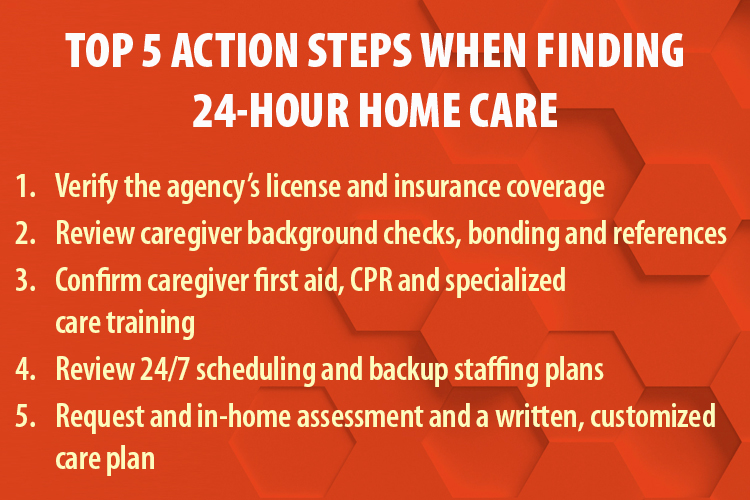
- Verify the agency’s license and insurance coverage.
- Ask about caregiver background checks, bonding, and references.
- Confirm caregiver training in first aid, CPR, and specialized care.
- Determine whether you can meet caregivers before placement.
- Review 24/7 scheduling and backup staffing plans.
- Get a detailed list of services and supervision protocols.
- Clarify all rates, fees, and accepted insurance options.
- Request an in‑home assessment and a written, customized care plan.
- Ensure care plans are regularly reviewed and updated.
- Ask about the procedure for emergencies or communication concerns.