
Alzheimer’s disease is a progressive neurodegenerative disorder that requires evolving care strategies to support patients and their families throughout its stages. Care options range from remaining at home with loved ones to specialized memory care communities, each uniquely designed to address the changing needs and symptoms of individuals with dementia. There is a spectrum of Alzheimer’s care options, guiding you to make informed choices at every step.
10 Early Signs and Symptoms of Alzheimer’s
Before determining the right care option for your loved one, it’s important to understand the early signs and symptoms of Alzheimer’s disease. The Alzheimer’s Association identifies 10 early warning signs that may indicate Alzheimer’s or another form of dementia:
- Memory loss that disrupts daily life
- Challenges in planning or solving problems
- Difficulty completing familiar tasks
- Confusion with time or place
- Trouble understanding visual images and spatial relationships
- New problems with words in speaking or writing
- Misplacing things and losing the ability to retrace steps
- Decreased or poor judgment
- Withdrawal from work or social activities
- Changes in mood and personality.
It is important to note that the Alzheimer’s Association also lists the typical age-related change with each of these signs, so as to not confuse these early signs with typical aging. Everyone has episodes of forgetfulness from time to time, but people with Alzheimer’s will display these symptoms ongoing, and will worsen over time.
If you begin noticing several of these signs occurring consistently and progressively, it may be time to explore supportive care options—such as in-home care—that can provide safety, structure, and compassionate assistance while allowing your loved one to remain in familiar surroundings.
When is In-Home Alzheimer’s Care the Right Option?
Selecting a care strategy begins with assessing the stage of Alzheimer’s your loved one is in, their health, routines, and preferences. Considerations include cost, location, family capacity to support care, and the availability of local resources. Many families consult the Alzheimer’s Association for recommendations and planning tips.
- In-home care is suitable for individuals with mild to moderate symptoms and strong family support.
- Day programs promote engagement and provide supervision during working hours.
- Memory care and assisted living communities provide intensive, round-the-clock attention.
- Respite and hospice care support families during key life transitions or emotionally challenging times.
- Care Programs, such as those provided by the Veterans Affairs (VA), offer resources and support for veterans with Alzheimer’s disease and their families, including specialized clinics and programs.
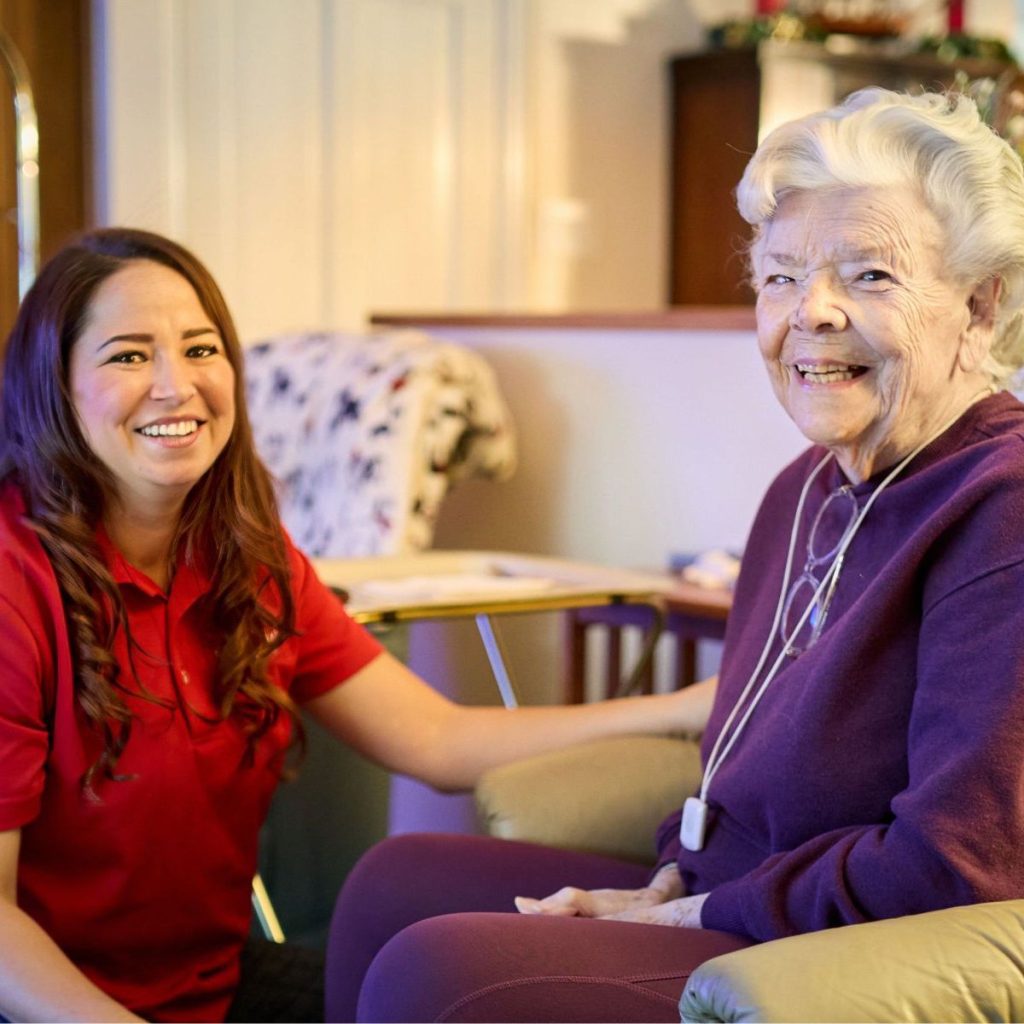
For many families, Alzheimer’s care begins at home, where loved ones can remain in familiar surroundings, while receiving the support they need. In-home care allows your loved one in early or moderate stages to maintain their routines and independence while minimizing disorientation and anxiety.
Just as importantly, professional in-home support provides much-needed respite for family caregivers. By sharing the responsibilities of daily care, family members can step back from the ongoing responsibilities and instead focus on being a spouse, daughter, son, or friend again—preserving the emotional connection and dignity at the heart of the relationship.
Professional in-home care provides essential support with daily activities such as bathing, dressing, medication reminders, meal preparation, light housekeeping, transportation, and meaningful companionship. Families may begin with part-time assistance and increase support as needs evolve, ensuring safety and continuity of care as symptoms progress.
Rhythms Home Care in Denver, CO, specializes in memory care and dementia support, offering personalized plans tailored to each individual’s unique needs and rhythms, with flexible options ranging from 4 to 24 hours of care. Their compassionate, trained care partners deliver both elderly in-home companion care and in-home medical care, enhancing quality of life for individuals living with Alzheimer’s while also providing critical respite for family caregivers—helping prevent burnout and preserving the loving relationships at the heart of caregiving.
What Strategies Will Help Me Better Support My Loved One Living with Alzheimer’s?
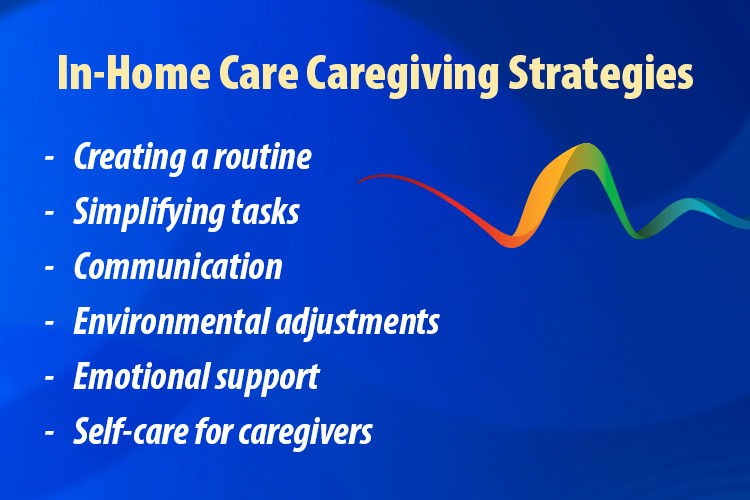
Creating a Routine
For many families, establishing a consistent daily schedule can help individuals with Alzheimer’s feel more secure and reduce confusion. Routine brings comfort and predictability to those with Alzheimer’s. A typical day should balance activities that stimulate both the mind and body, such as gentle exercise, listening to music, and connecting with nature, with periods of rest and relaxation.
Engaging activities don’t need to be elaborate; simple tasks like sorting objects, reminiscing with photographs, listening to music, or tending a small garden can foster joy and reduce anxiety. Flexibility and consistency is key; adapting the schedule to the person’s needs and abilities, can make life smoother for everyone involved. Including daily routines for meals, hygiene, and activities to promote security and reduce anxiety.
Simplifying Tasks
Breaking down tasks into smaller, manageable steps can make it easier for individuals to participate. Strategies that focus on simplifying daily tasks can significantly improve the quality of life for both caregivers and their loved ones. Establishing consistent routines for eating, bathing, and dressing helps reduce confusion and anxiety, providing a sense of structure and predictability. Breaking complex tasks into small, manageable steps, such as encouraging participation in brushing teeth or choosing clothing, helps maintain independence and dignity.
Use visual aids like labels, charts, and checklists to guide activities, and schedule tasks during the most alert times to minimize frustration. Simplifying clothing, switching to easy fasteners, and creating a calm environment with minimal distractions also make daily care easier. Incorporating meaningful activities and allowing extra time promotes cooperation and reduces stress, improving the caregiving experience.
Communicating with Loved Ones
Using clear, simple language and providing reassurance can help individuals feel more comfortable and connected. Alzheimer’s often impairs language and comprehension, which can lead to frustration and difficulty in communication. Try to speak slowly, use simple sentences, and ask straightforward yes-or-no questions. Non-verbal communication, such as gentle touch, eye contact, and positive facial expressions, reinforces reassurance and trust. If a loved one becomes confused or agitated, listen calmly and validate emotions, showing understanding without dismissing concerns.
Implementing memory aids, such as photos, charts, or checklists, helps with orientation. Maintaining patience also helps caregivers remain level-headed during repeated questions or difficult moments. Alzheimer’s Association offers training in communication through their education center for caregivers has been shown to reduce frustration and burnout.
Modifying the Home Environment
Caregiving strategies often involve making environmental adjustments to improve safety, comfort, and independence for loved ones with Alzheimer’s disease. Simplifying the home by removing clutter and unnecessary furniture minimizes confusion and risk of tripping and falling. Clear labeling on cabinets, drawers, and rooms helps with orientation and promotes autonomy. Adequate, soft lighting reduces shadows and glare that might cause disorientation or fear.
Furniture should be arranged consistently and comfortably, avoiding sharp edges and ensuring sturdy support. Installing safety devices like stove locks and smoke detectors safeguards against accidents. Creating calming spaces with familiar objects and controlled noise levels helps soothe agitation.
These thoughtful modifications create a secure, supportive environment tailored to the needs of individuals with Alzheimer’s.
Emotional Support for Your Loved One with Alzheimer’s
The heart of Alzheimer’s care is compassion. Listening to stories, celebrating small victories, and finding beauty in daily moments nurtures a sense of dignity and connection. Even as words and memories fade, feelings of warmth, safety, and a sense of belonging can persist.
Families and caregivers, with patience and creativity, provide the irreplaceable gift of presence and understanding through the challenges of Alzheimer’s. Providing a supportive and understanding environment can help individuals with Alzheimer’s cope with the challenges of the disease.
How Can Caregivers Practice Self-Care While Supporting a Loved One with Alzheimer’s?

Caregivers must prioritize their own health while guarding your well being as a caregiver. Alzheimer’s caregivers are at high risk for stress, anxiety, and depression. To remain effective, self-care must be prioritized:
- Practice mindfulness and relaxation techniques, such as deep breathing, meditation, or visualization.
- Exercise regularly by incorporating activities like walking, yoga, or stretching into your daily routine.
- Maintain a balanced diet and stay properly hydrated to support your physical health.
- Seek and accept help from family members or community programs. Delegate tasks when possible, including meal preparation or errand running.
- Use respite care for temporary relief and schedule time for personal enjoyment, hobbies, or quiet reflection.
- Monitor sleep patterns and aim for restful nights; quality sleep improves resilience and mood.
Mindfulness practices have proven effective in reducing caregiver stress. Techniques such as mindfulness training, cognitive exercises to address negative thoughts, and self-as-context exercises that encourage observing thoughts without judgment can make a meaningful difference. Mobile apps like Headspace offer convenient ways to incorporate mindfulness routines into daily life.
You don’t have to navigate this journey alone. At Rhythms Home Care, we specialize in memory care services designed to lift the burden from family caregivers. Our trained, compassionate care partners understand the unique challenges of Alzheimer’s and provide the specialized support your loved one needs—giving you the respite and peace of mind essential for your own well-being. Whether you need a few hours of relief each week or more comprehensive daily assistance, we’re here to help sustain both you and your loved one through every stage of the caregiving journey.